You are reading the real Week 0 out of the course, nothing removed. The other twelve weeks, the crop dossiers and the trouble cards are in the download. Back to the course →
Before day one
Lock the scope, or the ninety days will spend themselves.
Most failed first gardens were not killed by frost. They were killed by a second project that started in week two.
The four numbers that decide the garden
- Sun. Hours of direct light on the actual patch — go stand there at midday and again at four. “Pretty sunny” is not a measurement.
- Water. A hose or drip line that already reaches, or a written plan to get one there this week. A bed with no water is a planter of good intentions.
- Hours. What you can give on a work night, not a Saturday in your head. Fifteen honest minutes beats a fictional two hours.
- Money. A cap for the whole ninety days: soil, bed, seed or transplants, mulch, one watering fix. Not a greenhouse.
Chickens, ducks, rabbits, goats. Fruit trees as a first project. A tiller. A twenty-bed grid. A canning kitchen. If it does not help this one bed make food, it waits. This is not discipline for its own sake — every one of those things competes for the same fifteen minutes, and the bed is the one that feeds you first.
The default garden
One 4×8 foot bed, or two 4×4s, or roughly seven containers. You can reach the middle without standing on the soil. If you already have more space, you still plant this much. Unused soil grows weeds and guilt, and a beginner with four beds waters none of them properly.
Get your two dates
This is the only step in Week 0 that needs the internet, and it is the one that makes every other week correct.
Enter your ZIP. Write the last spring frost and the first fall frost onto the worksheet below. If it says your winter frost risk is effectively zero, write “rare” — that is an answer, and it changes your track.
While you are there, run 'When do I plant this?' for one crop you are sure about. It is the fastest way to find out whether you are in the season you think you are in.
Pick the start track from the calendar, not from a mood
| You are starting in… | Track | Do not plant |
|---|---|---|
| Sept–Feb, mild winter or low desert | Cool start | Tomatoes as the main crop |
| Late winter to spring, after hard freezes ease | Warm start | A full bed of lettuce you expect to last to August |
| Peak summer somewhere genuinely hot | Heat start | Spinach, peas or broccoli in open sun |
| Cold winter, snow on the ground right now | Cool start, but start indoors — Week 2 covers it | Anything outdoors this week |
Read your track’s page once you have chosen. It has a worked 4×8 map with every square filled in, so you are not inventing a layout in a parking lot.
$80–$180 covers a filled 4×8, compost, mulch, seed or a flat of transplants, and a cheap timer. If the number is past $300 before anything is planted, you are buying infrastructure, not a garden. Write the cap down and let it argue with you at the store.
Two dates and a track on the worksheet. That is the whole job. Week 1 starts spending money and it will ask you for all three.
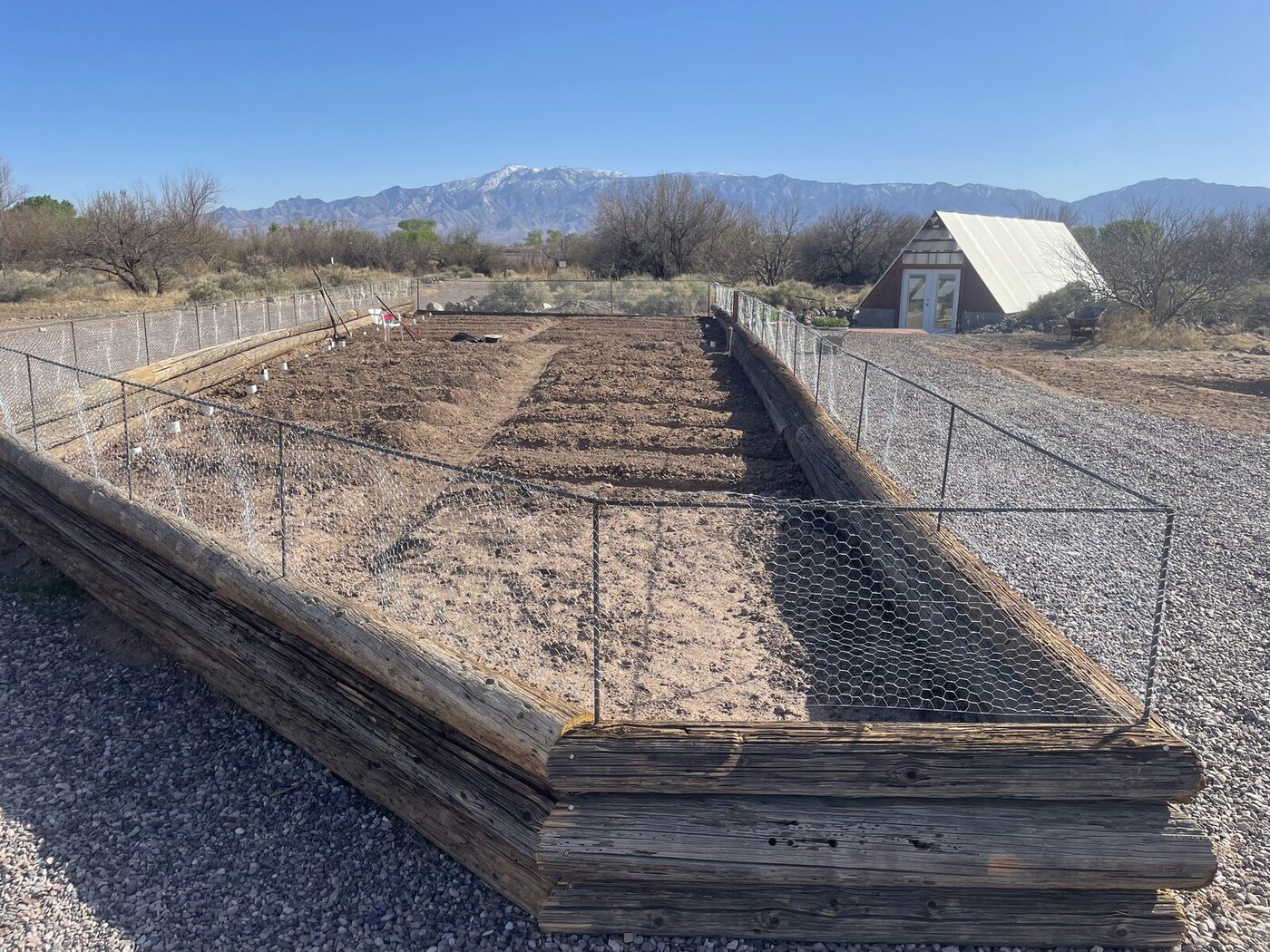
First Ninety · built on a homestead in the Gila Valley, Pima, Arizona. Every photograph in this course is from that ground. This folder works with no internet connection. The blue Plotline boxes are the only thing in it that needs to be online.